
Getting the model wrong has consequences. 84% of organizations experienced an identity-related breach in the past year, according to the Identity Defined Security Alliance. The right access control model directly supports least privilege, protects sensitive data, generates audit evidence for compliance, and keeps administrative overhead manageable across hybrid, cloud, and on-premises systems.
This article compares three foundational models: role-based access control (RBAC), attribute-based access control (ABAC), and mandatory access control (MAC). We'll break down how each one works, then walk through practical criteria for choosing between them.
Key Takeaways
- RBAC, ABAC, and MAC decide access using different inputs: roles, attributes and context, or enforced labels
- RBAC is easiest to administer but can suffer from role sprawl if left ungoverned
- Contextual precision is ABAC’s strength—only if attribute data is clean and available
- For high-assurance environments, MAC offers the strictest control and the least flexibility
- Many organizations layer these models rather than picking just one
What Is Access Control and Why Is It Important?
Access control decides whether an authenticated subject can access a resource and what it can do there. That subject may be a user, service account, device, or application.
It's easy to blur this with authentication, but they're distinct steps:
- Identification establishes who or what is claiming an identity
- Authentication verifies that claim
- Authorization applies the access control model to decide what the authenticated subject can actually do
- Accounting creates the audit trail that reconstructs who did what, and when
Access control is how core security principles get enforced. Least privilege, separation of duties, need-to-know, and data confidentiality all depend on the model correctly translating policy into controls.
What Happens When the Model Fails
Choosing or configuring the wrong model creates tangible risk. Common failure patterns include:
- Excessive permissions that accumulate because no one revokes access when it's no longer needed
- Role sprawl, where hundreds of narrowly scoped roles become impossible to manage
- Inconsistent exceptions that bypass documented policy without a paper trail
- Weak audit trails that can't demonstrate who approved an access grant or why
CISA reports that 80% of web-application attacks leverage stolen credentials. A poorly designed access model widens the blast radius of a single compromised account, turning one stolen password into access across dozens of systems.
Access Control Models: RBAC, ABAC, and MAC
Each model answers the same underlying question: can this subject perform this action on this resource? What differs is the information used to answer it, and who controls that decision.
Role-Based Access Control (RBAC)
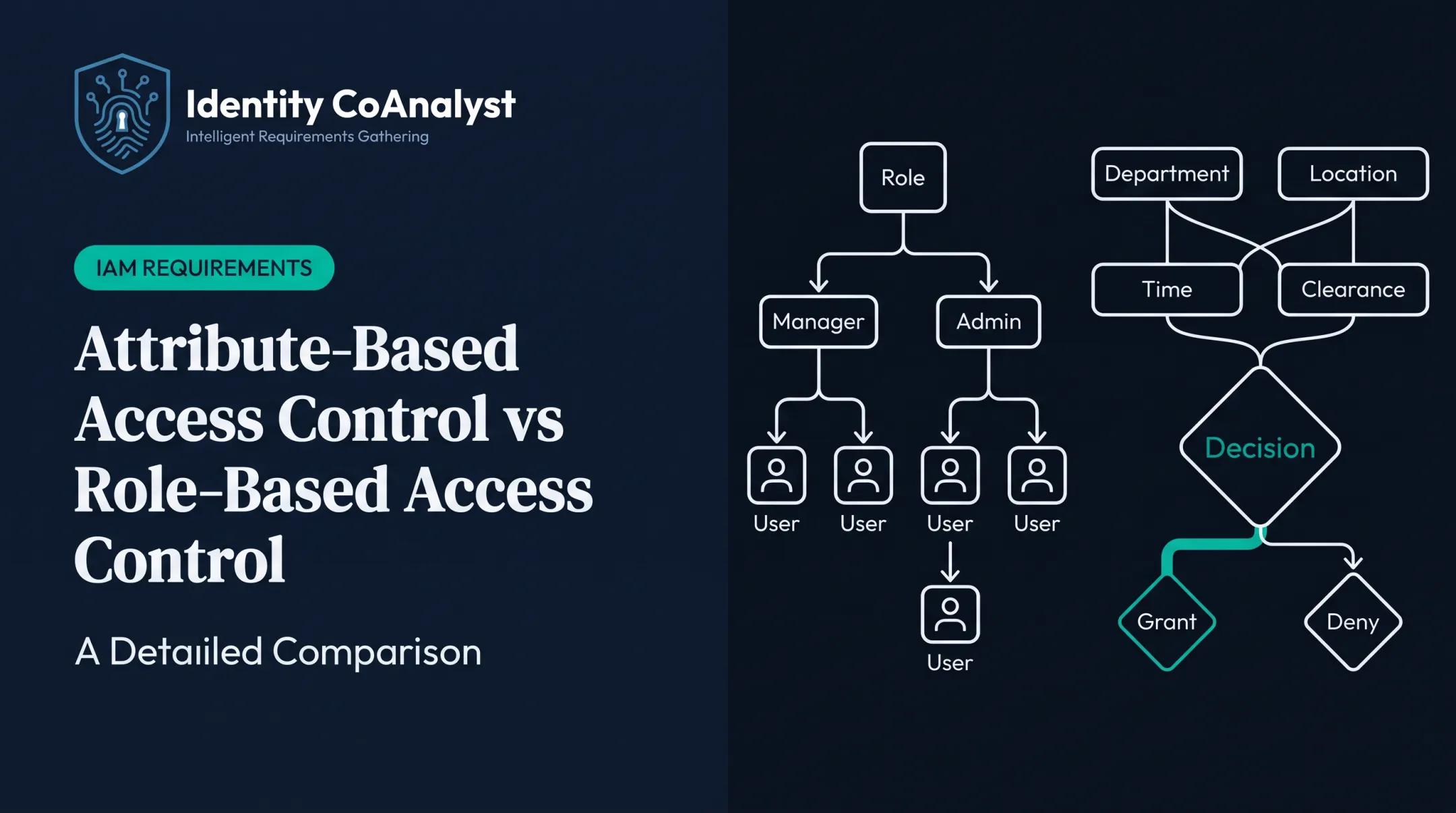
RBAC assigns permissions to roles, and users get access by being assigned to one or more roles. The flow runs from job function to role to permission, so a "Claims Processor" role might bundle exactly the permissions that job requires, no more and no less.
Common examples:
- A nurse role that grants read access to assigned patients' clinical records
- A database administrator role scoped to specific environments
- A finance approver role limited to invoices under a defined dollar threshold
The catch is governing conflicts. Separation-of-duties conflicts, like allowing the same person to both create and approve a purchase order, need to be identified and blocked. One documented example: a Purchase Requestor and Purchase Approver combination is treated as a hard block under SOX-driven procurement controls, with any exception requiring CFO sign-off and audit logging.

Attribute-Based Access Control (ABAC)
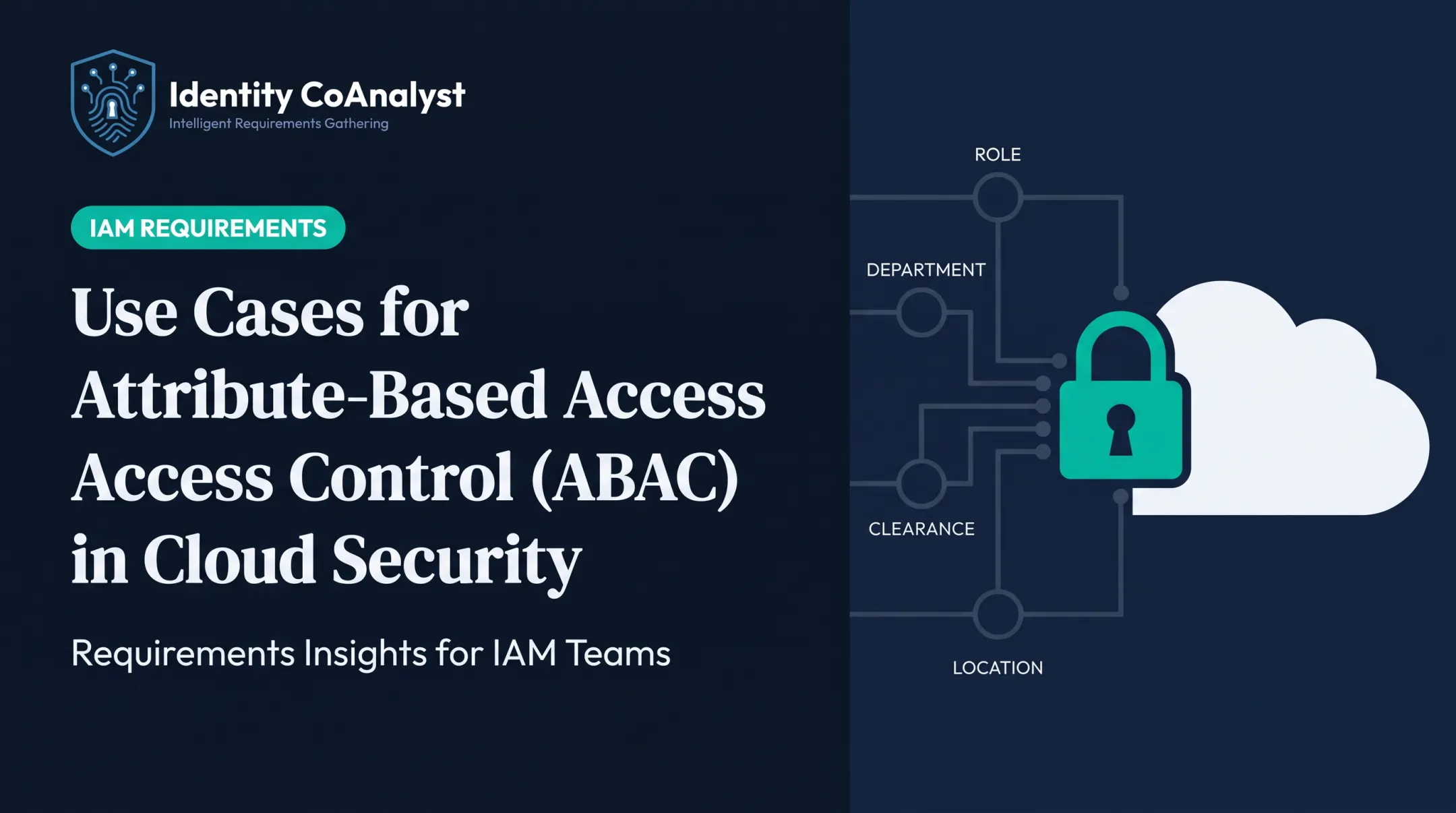
ABAC is a policy-driven model that evaluates attributes of the subject, resource, action, and environment rather than relying purely on a static role. NIST SP 800-162 defines it as controlling access by evaluating rules against these attributes and current environmental conditions.
Attributes commonly used include:
- Subject attributes: department, employment status, security clearance
- Resource attributes: data classification, application type, compliance scope
- Environment attributes: time of day, IP address, device security posture
Practical examples:
- Finance staff reach payroll systems only during business hours from the corporate network
- Developers push to production only during an approved change window
- Emergency hospital access activates only from an on-site location
The trade-off is dependency. ABAC decisions are only as good as the attribute data feeding them. If department codes are stale or device posture data isn't syncing correctly, the policy engine makes decisions on bad information.
Mandatory Access Control (MAC)
MAC is centrally governed. Access decisions run through security labels, classifications, and clearance levels defined by formal policy, not by resource owners or individual users. NIST's glossary defines MAC as nondiscretionary: a subject generally cannot pass information to unauthorized parties, grant privileges, or alter access rules, no matter their role in the organization.
MAC fits environments where confidentiality or integrity requirements are non-negotiable, such as classified government systems or highly regulated data environments. Bell-LaPadula is the classic example of a MAC policy designed to protect data secrecy.
The trade-off is rigidity. MAC requires:
- Disciplined classification maintenance
- Centralized administration
- Formal approval processes for any clearance change
- Little to no discretion left to end users or data owners
Comparing RBAC, ABAC, and MAC
| Factor | RBAC | ABAC | MAC |
|---|---|---|---|
| Decision input | Assigned roles | Subject, resource, environment attributes | Security labels and clearances |
| Administrative control | Distributed (role owners) | Distributed (policy authors) | Centralized only |
| Flexibility | Moderate | High | Low |
| Implementation effort | Moderate (role engineering) | High (attribute governance) | High (classification discipline) |
| Typical use case | Standard enterprise access | Dynamic, context-sensitive access | Classified or high-assurance systems |
Scenario: A sensitive patient record needs to be accessed by three different systems. Under RBAC, access is granted because the user holds a "Clinician" role. Under ABAC, access is granted only if the clinician is currently assigned to that patient's care team and is using an approved device. Under MAC, access is granted only if the clinician's clearance level matches or exceeds the record's classification label, full stop, regardless of role or context.
Many organizations don't pick just one. A layered architecture might use RBAC for baseline entitlements, ABAC conditions to restrict access further based on context, and MAC-style labels for the most sensitive data categories.
That mix works only when policy precedence and conflict resolution are documented clearly. Otherwise, rules quietly contradict each other.
How to Choose the Right Access Control Model
Selecting a model starts with the business problem, not the technology.
Start with the business objective and risk level. Identify the resources being protected, the actions users need to perform, and the consequences of unauthorized access. Is confidentiality the dominant concern, or is separation of duties?
Assess organizational structure and access patterns. RBAC fits stable, repeatable job functions; ABAC fits access that shifts by project, device, or location. Choose MAC when formal classification and centralized enforcement are mandatory, not optional.
Evaluate data and policy readiness. This means checking the quality of role definitions, identity records, resource classifications, and attribute sources. Weak data here undermines any model you choose.
Plan for scale and change. Onboarding, transfers, contractors, mergers, and cloud workloads all stress-test a model. A single contractor access requirement can touch the HR system of record, three applications, an approval chain, and a certification cadence all at once.
Compare governance and operating costs. Factor in policy design, integration work, access reviews, and the ongoing burden of resolving denied requests or conflicting rules.

Most of these steps stall at the same point: getting accurate, complete requirements from stakeholders who don't speak in policy language. When workflows get built around incorrect assumptions, access requests that should take minutes end up taking days.
Identity CoAnalyst addresses that stall. It sits upstream of IGA and IAM platforms rather than replacing them, using conversational AI and 500+ practitioner-written questions across 11 identity domains to capture:
- Role definitions and attribute dependencies
- Governance rules and exception paths
- Implementation-ready requirements before build starts
Firms using it have cut a traditional 12-week requirements cycle to roughly 10 days, with audit-ready documentation from day one.
What to Check Before Finalizing a Model
Before locking in a decision, stress-test it against a few common failure points.
Familiarity alone is a weak reason to pick RBAC. Test whether roles match real access patterns. If you're generating hundreds of narrowly scoped roles or stacking unapproved exceptions, the role model isn't fitting reality.
ABAC depends on attribute quality. Attributes must be accurate, timely, consistently named, and available to the policy decision point. Document what happens when an attribute is missing or contradictory—that case will show up in production.
MAC is not automatically the "most secure" answer. It only holds if the organization can sustain classification discipline, formal approvals, and centralized administration over time.
After those model-specific checks, run the same operational tests on any option you shortlist:
- Least privilege and separation of duties — Are conflicting permission combinations blocked, with documented exceptions?
- Emergency access — Is there a time-boxed override with mandatory post-access review?
- Temporary and project-based access — Does access expire automatically under clear review rules?
- Non-human identities — Are service and system accounts in the model from the start, not bolted on later?
- Recertification and deprovisioning — Is there a defined cadence for standard and privileged access?
Concrete benchmarks help pressure-test the design. One documented framework caps emergency access at 8 hours, requires approval within 24 hours, and mandates full session recording. Project access often works well with a 12-month cap, quarterly reviews, and automatic revocation 30 days after project close.

Conclusion
RBAC, ABAC, and MAC differ mainly in what they use to make an access decision: roles, attributes and context, or centrally enforced labels and clearances. None is universally superior. The right choice depends on:
- Risk tolerance
- Policy complexity
- Data quality
- Ongoing governance the organization can sustain
Before implementing any of these models, document the requirements and decision logic first. A model that isn't understandable or auditable becomes a liability in practice. Getting that groundwork right up front, rather than retrofitting after rollout, keeps access control practical to operate for years—not just months.
Frequently Asked Questions
What are the main types of access control models?
The most common models are RBAC, ABAC, MAC, DAC (discretionary access control), and rule-based access control. This article focuses on RBAC, ABAC, and MAC because they represent distinct role-driven, attribute-driven, and classification-driven approaches.
What is the difference between RBAC, ABAC, and PBAC access control models?
RBAC grants access based on assigned roles. ABAC evaluates attributes and contextual conditions. PBAC applies centrally defined policies that can include identity, role, clearance, or risk, and it often overlaps with ABAC.
Can RBAC and ABAC be used together?
Yes. Many organizations use RBAC for baseline entitlements and layer ABAC conditions on top for context-sensitive restrictions, such as limiting a role's access to business hours or approved devices.
Is MAC only used in government systems?
MAC is most common in government and defense environments, but any organization handling highly sensitive data with strict confidentiality requirements can apply MAC-style classification and clearance enforcement.