
According to a 2025 report from the Identity Defined Security Alliance (IDSA), 59% of organizations still handle provisioning and offboarding manually through tickets and emails. This isn't just inefficient; it's dangerous. An Identity and Access Management (IAM) life cycle framework provides the structure needed to get this under control. It’s the combination of policies, people, data, workflows, and technology used to manage an identity from creation to removal.
This article breaks down the IAM life cycle framework, from its core components and operational stages to the best practices that ensure your controls are effective, auditable, and secure.
Key Takeaways
- IAM life cycle management is more than just onboarding and offboarding; it includes authentication, authorization, access requests, certifications, and continuous monitoring.
- Reliable automation is impossible without authoritative identity data and clearly defined ownership across business and IT teams.
- Core control objectives include enforcing least privilege, ensuring timely deprovisioning, conducting recurring access reviews, and generating audit-ready evidence.
- A complete framework must govern all identity types—employees, contractors, partners, and service accounts—based on their unique risks and business context.
IAM Life Cycle Framework: Definition, Scope, and Operating Model
IAM life cycle management covers how identities and access rights change over time—not the full stack of authentication and authorization controls. It gives you a structured, repeatable, and defensible process for every stage of an identity's relationship with your organization.
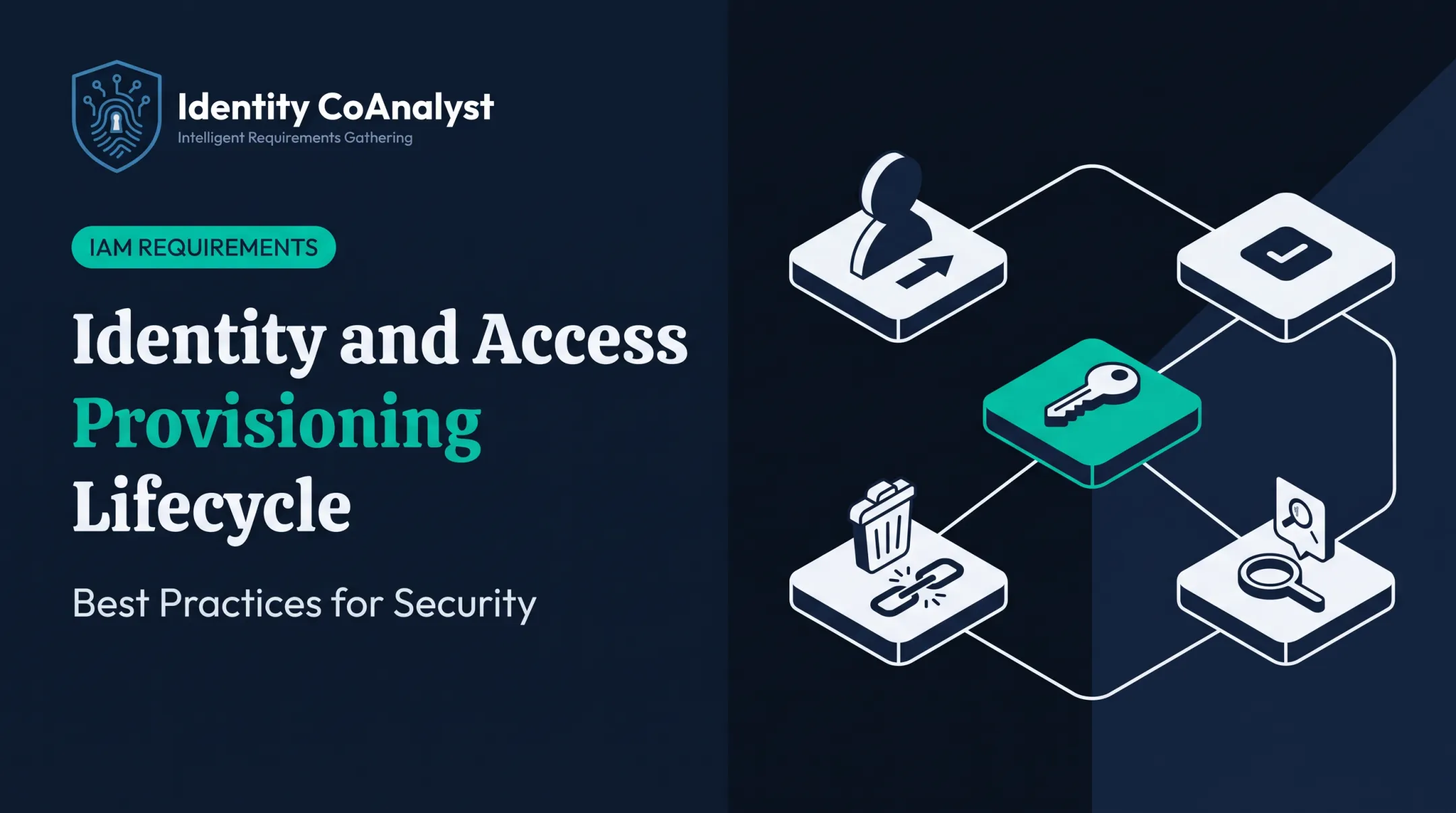
The operational backbone is the joiner-mover-leaver (JML) model, which handles the three highest-impact identity events. A complete framework also covers ongoing governance work that sits between those events: access requests, periodic certifications, and policy exception handling.
At its foundation is the identity record. This is the central repository of information for each identity, containing key attributes that drive all life cycle actions. A robust identity record typically includes:
- Unique identifier (such as Employee ID)
- Employment or relationship status (active, terminated, on leave)
- Department, manager, and location
- Job role or title
- Identity type (employee, contractor, service account)
- Risk context (such as access to sensitive data)
That data must come from authoritative sources: trusted systems of record such as HR platforms (Workday, Paycom), vendor management systems, and asset databases for non-human identities.
The framework must state which source owns each attribute so values do not conflict. HR typically owns name and department; a project tool may own team assignment.
A working framework also needs a clear operating model. Ownership is shared, not siloed in IT or security:
- HR and vendor management (identity creation and status changes)
- IAM team (controls, integrations, and policy enforcement)
- Application owners and managers (access decisions and approvals)
- Compliance teams (evidence standards and audit response)
Define the rules of engagement before you build workflows:
- Lifecycle triggers for join, move, and leave events
- Decision logic for birthright vs. requested access
- Approval paths by risk and identity type
- Evidence requirements for every identity event
Key Components of an IAM Life Cycle Framework
A mature IAM life cycle framework is built on several interconnected components that work together to automate processes and enforce policy.
Identity Data and Authoritative Sources
Reliable identity attributes are the fuel for the entire life cycle engine. They drive everything from initial account creation and role assignment to access changes and termination.
If source data is stale or conflicting, automated processes produce the wrong outcomes. When an HR "Active" status lags, a new hire cannot get day-one access and loses productive time.
Access Models and Policy Controls
These are the rules that govern who can access what. A strong framework incorporates multiple policy controls to enforce security principles:
- Role-Based Access Control (RBAC): Groups permissions into business roles such as "Sales Representative" or "Finance Analyst" to simplify assignment.
- Attribute-Based Access Control (ABAC): Grants or denies access from user, resource, and environment attributes (for example, Finance department during business hours only).
- Least Privilege: Grants only the minimum permissions required for the job.
- Segregation of Duties (SoD): Blocks conflicting permissions that enable fraud, such as creating and approving payments.

Authentication, Authorization, and Access Fulfillment
First, you must prove an identity is who it claims to be (authentication), then you decide what that identity is allowed to do (authorization). These components work together:
- Authentication: Verifies identity with passwords, multi-factor authentication (MFA), or biometrics.
- Authorization: Enforces policy to grant or deny access to applications and data.
- Access Fulfillment: Provisions accounts and permissions, then deprovisions them in target systems when access must end.
Workflow, Integration, and Orchestration
This automation layer ties authoritative sources to target applications through an IAM or Identity Governance and Administration (IGA) platform. When HR signals a new hire, a workflow can create accounts in Active Directory, Microsoft 365, and other baseline apps.
Integrations still fail, and not every system is connected. The framework must define retries, exception handling, and manual fulfillment paths for disconnected or legacy applications.
Governance, Certification, and Evidence
Access is not a "set it and forget it" process. Governance components ensure permissions remain appropriate over time.
- Access Certifications: Periodic reviews where managers or application owners re-approve user access.
- Audit Logs: Records of who requested access, who approved it, and when it was fulfilled—evidence auditors expect.
- Reporting: Dashboards that show the state of access across the organization.
Monitoring, Metrics, and Continuous Improvement
A mature framework tracks control effectiveness with clear metrics. Common KPIs include:
- Time to provision and deprovision access
- Access review completion rates
- Count of orphaned or dormant accounts
- Policy violation and remediation aging
IAM Life Cycle Stages in Practice
The JML model provides a practical way to apply the framework's components to real-world events.
Joiner
When a new employee is hired or a contractor relationship is confirmed, the joiner process begins. A "hire" event in the HR system triggers a workflow that:
- Creates the digital identity in the central identity store.
- Provisions baseline access (birthright access) like an email account and intranet access.
- Assigns role-based entitlements based on the user's department and job title.
- Enrolls the user in MFA and other security systems.
- Routes requests for additional access that falls outside the standard profile for manager or application-owner approval.
Mover
Employees change roles, get promoted, or move to new departments. A mover event should trigger an access comparison to prevent "privilege creep"—the slow accumulation of unnecessary permissions. The process should automatically:
- Identify the change (such as a new job title or manager in the HR system).
- Grant new access required for the new role.
- Revoke obsolete access from the previous role.
For example, when a Finance Analyst is promoted to Finance Manager, the mover workflow removes their individual contributor permissions and adds manager-level access and team oversight tools.
Leaver
When an employee resigns or a contract ends, the leaver process must be swift and complete. An update to the user's status in the HR system should immediately trigger a workflow to:
- Disable the primary identity and all associated accounts.
- Revoke all active sessions and credentials.
- Remove access from all applications, both cloud and on-premises.
- Transfer ownership of business resources (such as files and reports) to a manager.
- Preserve records as required for compliance and legal holds.

Ongoing governance continues between these major life cycle events:
- Processing on-demand access requests as business needs change
- Conducting periodic access certification campaigns
- Monitoring for anomalous activity or policy violations
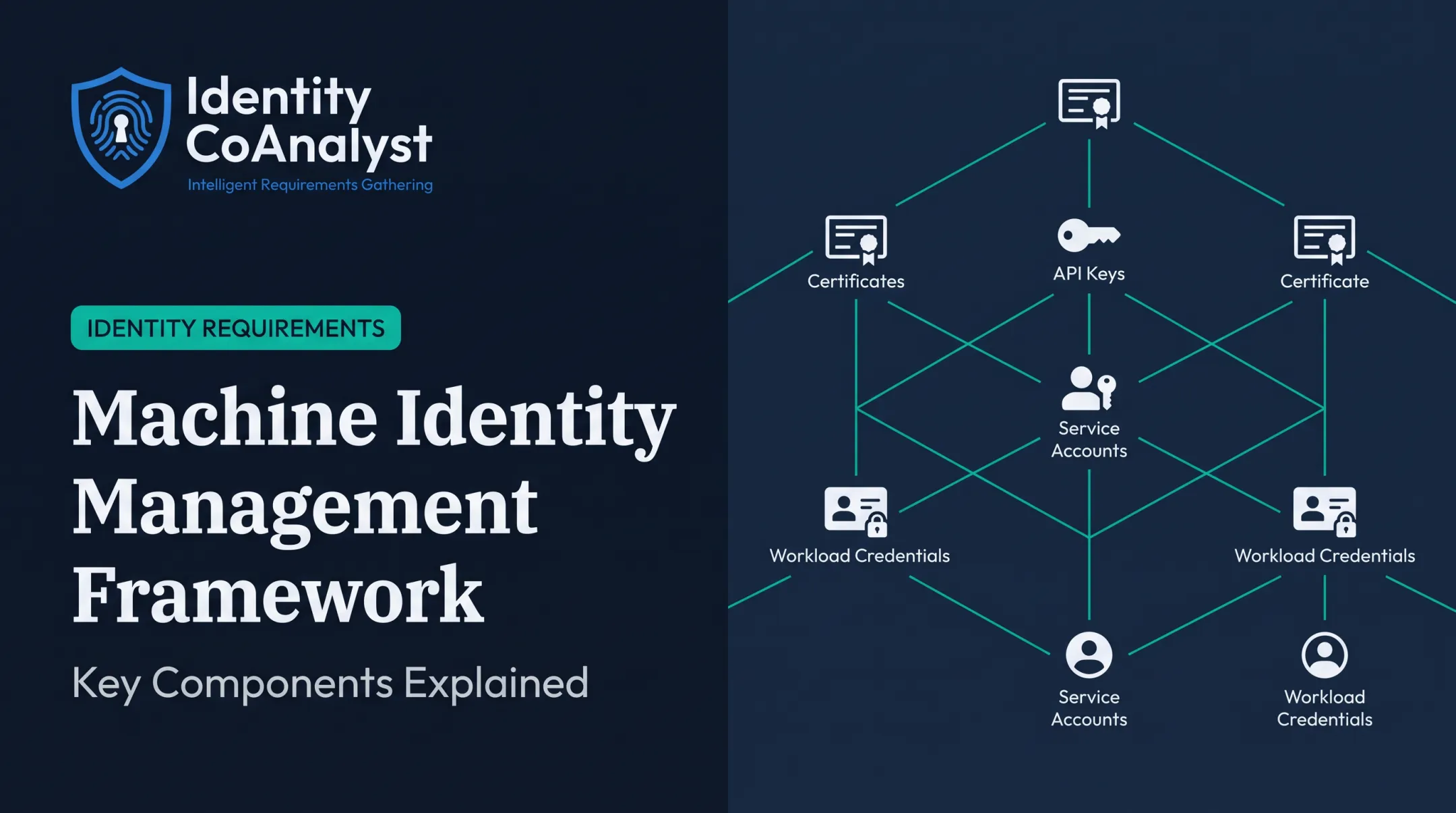
Non-human and non-employee identities need the same life cycle discipline. A study from CyberArk revealed that 93% of organizations experienced two or more identity-related breaches in a year, with machine identities often cited as the riskiest type. Your framework must also govern:
- Contractors and partners: Tie access to contract end dates with automated deprovisioning.
- Service accounts and API keys: Assign clear owners, purpose definitions, and scoped permissions, then review them periodically so they do not become orphaned or over-privileged.
IAM Life Cycle Best Practices
Strong IAM lifecycle programs fail less often because of missing tools than because of weak policy, dirty identity data, and reviews that nobody trusts. Use these practices to keep joiner, mover, and leaver controls durable after go-live.
Establish Policy and Ownership Before Automation
Document the operating rules before you configure workflows:
- Define identity types, lifecycle events, and access principles such as least privilege
- Assign approval responsibilities and exception handling rules
- Publish a RACI so ownership is clear for every lifecycle decision
Start with Authoritative Data
Treat source data quality as a control, not a cleanup task after launch:
- Inventory authoritative identity sources and reconcile duplicates
- Put data quality checks in place before complex automation
- Define a minimum viable identity profile with the attributes your JML processes actually need
Automate JML Processes with Controlled Exceptions
Use event-driven workflows to cut manual effort, delay, and inconsistency across joiner, mover, and leaver events. Route high-risk access requests, unusual changes, and failed provisioning attempts for human review instead of allowing silent exceptions.
Apply Least Privilege and Role Governance Continuously
Least privilege is continuous governance, not a one-time cleanup:
- Design a clean RBAC model with clear role definitions
- Use entitlement analysis to discover and rationalize roles
- Enforce Segregation of Duties checks inside request and provisioning workflows
- Prefer temporary, just-in-time access for privileged tasks over standing permissions
Make Access Reviews Meaningful
Stop rubber-stamping. Make certifications decision-ready:
- Run risk-based campaigns that prioritize the most sensitive access
- Give reviewers plain-language context for what each permission allows
- Escalate reviews that miss completion deadlines
- Automatically remediate access revoked during a campaign

Secure the Full Identity Population
Inventory and govern every identity type by risk profile—not only employees:
- Workforce users, contractors, and partners
- Service accounts and other non-human identities
- Any shared or break-glass accounts with system access
Test, Monitor, and Improve
Test controls against normal paths and edge cases such as rehires, emergency access, and duplicate records. Track metrics that prove control effectiveness—not only ticket volume or automation counts.
An IDSA report found that 84% of identity incidents directly impacted business operations, which is why lifecycle monitoring has to catch failure modes before they become outages or audit findings.
How to Implement and Measure the Framework
A successful implementation starts with planning, not technology selection. We recommend a phased approach:
- Discover: Inventory your identities, applications, and current life cycle processes.
- Define: Identify authoritative sources, map business events to IAM triggers, and prioritize high-risk access and applications.
- Design: Define your target operating model, including policies, approval logic, and reporting needs.
- Pilot: Start with a limited set of integrations to prove the model and gain momentum.
- Expand: Grow the program through measured releases, incorporating more applications and automation over time.

The most critical, and often most difficult, phase is discovery and requirements gathering. Before you can configure an IAM or IGA platform, you must capture the business rules, stakeholder needs, and compliance obligations from across the organization.
Identity CoAnalyst sits upstream of that implementation work. It uses AI-guided questionnaires so distributed stakeholders can give plain-language input on their processes and needs.
That compresses requirements gathering from roughly 8–16 weeks to under 10 days and yields structured, audit-ready documentation. You build or buy an IAM solution that matches how the organization actually operates.
Once the model is in production, measure it the same way you phased the rollout: baseline key metrics, set realistic targets, and track progress. Useful metrics include:
- Fulfillment Time: Average time to provision or deprovision access.
- Access Accuracy: Percentage of identities with correct, policy-compliant permissions.
- Termination Completion: Percentage of leavers fully deprovisioned within your SLA (for example, 24 hours).
- Review Completion: Percentage of access certifications completed on time.
- Orphaned Accounts: Number of active accounts not tied to a known, active identity.
Conclusion
A mature IAM life cycle framework is both a technical control and a business program. It connects identity data, policy, automation, and governance so access stays accurate as people and systems change. Structured identity management reduces risk, improves operational efficiency, and gives auditors clear evidence of who has access and why.
The path to maturity starts with a few priority actions:
- Establish clear ownership for identity processes and data
- Improve authoritative source data quality
- Automate repeatable joiner, mover, and leaver events
- Enforce least privilege by default
- Review access on a regular cadence
Success still depends on a clear picture of your organization’s requirements. Careful discovery and documented needs are the foundation for selecting and configuring IAM capabilities that hold up in production. Identity CoAnalyst helps identity teams capture those requirements faster and turn stakeholder input into implementation-ready documentation before lifecycle design begins.
Frequently Asked Questions
What is the IAM lifecycle?
It's the end-to-end process of creating, managing, reviewing, and ultimately removing digital identities and their access permissions throughout a person's or system's relationship with an organization.
Can you explain the IAM lifecycle in simple terms?
Think of it like a company ID badge. The IAM lifecycle is the process of issuing the badge (joiner), changing its access levels when you move departments (mover), and collecting it when you leave (leaver), but for all your digital accounts and permissions.
What are the main stages of the IAM lifecycle?
The core stages are joiner (onboarding), mover (transfers/promotions), and leaver (offboarding). These are supplemented by ongoing governance activities like access requests, periodic reviews, and continuous monitoring.
Why is the IAM lifecycle important?
Proper lifecycle management enforces least privilege, reduces orphaned-account risk, streamlines operations, and provides a clear audit trail to prove compliance.
How can organizations automate the IAM lifecycle?
Organizations automate it by integrating authoritative sources (like HR systems) with an IAM/IGA platform. That connection drives event-driven provisioning, deprovisioning, approval routing, and access certifications, with people handling only the exceptions.