
Get it wrong, and the consequences show up in audits, breach reports, and frustrated end users waiting weeks for the right permissions. Broken access control was ranked the #1 application security risk in the OWASP Top 10:2021, appearing in an average of 3.81% of tested applications. Verizon's 2025 Data Breach Investigations Report also found credential abuse remains the most common attack vector, underscoring how much rides on getting identity and access decisions right.
This article breaks down RBAC and ABAC, where each one fits, and how to decide which your organization needs.
TL;DR
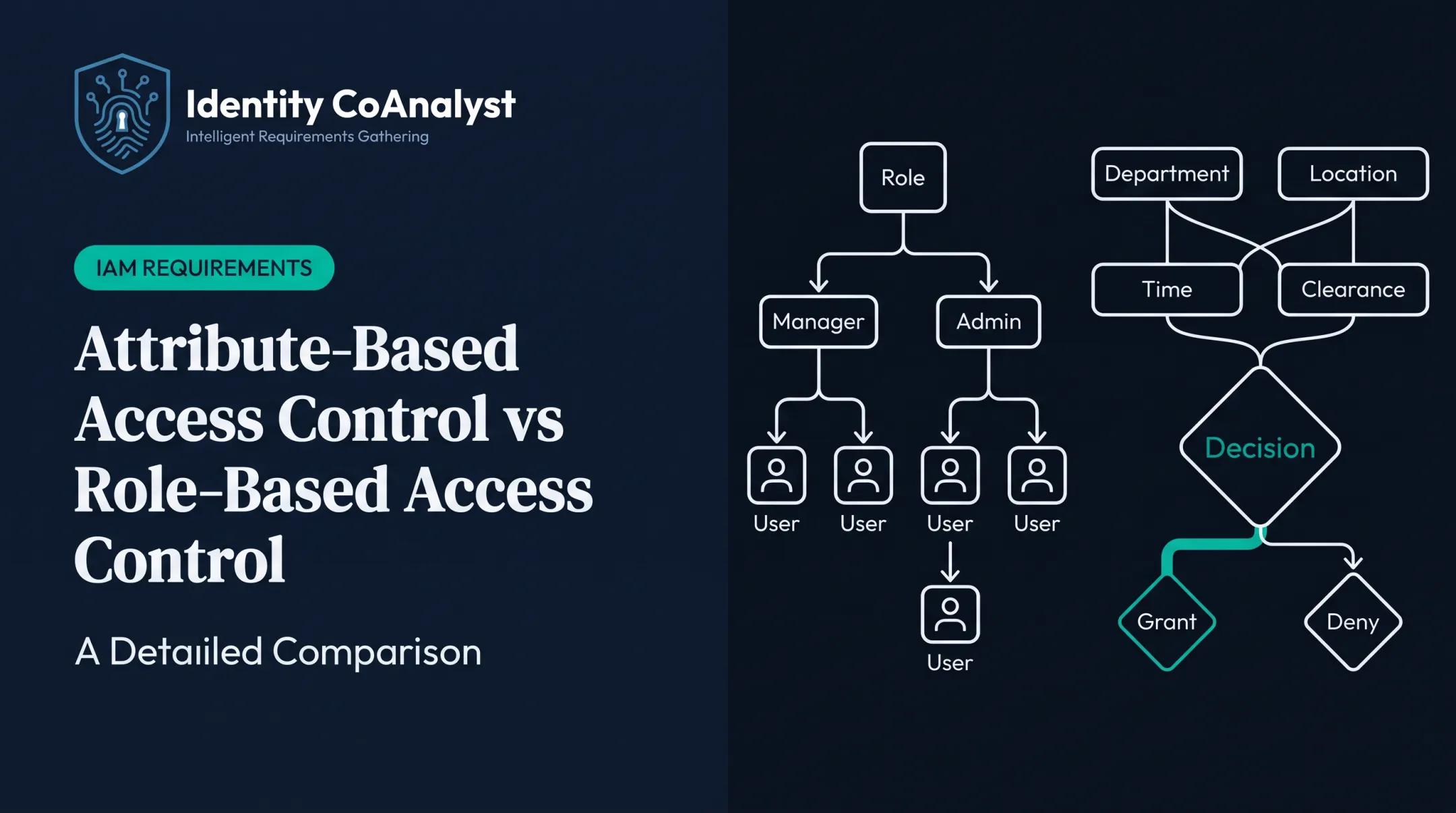
- RBAC assigns permissions based on predefined job roles; ABAC evaluates user, resource, and environment attributes in real time
- RBAC is simpler to implement and audit but risks "role explosion" at scale
- ABAC gives fine-grained, context-aware control but demands more upfront policy design
- Mature enterprises often run RBAC as a baseline with ABAC layered on top
- The right choice hinges on data sensitivity, regulatory obligations, and organizational complexity
RBAC vs ABAC: Quick Comparison
Side by side, RBAC and ABAC trade simplicity for precision. Use this table to match the model to your app’s risk profile and operating context.
| Factor | RBAC | ABAC |
|---|---|---|
| Implementation complexity | Lower: map roles to permissions | Higher: needs a policy engine and attribute mapping |
| Granularity of control | Coarse: tied to job function | Fine: tied to context (time, location, data sensitivity) |
| Scalability | Weakens as roles multiply | Scales well once policies are in place |
| Auditability and compliance | Straightforward role-assignment audits | More complex: policy logic plus attribute sources |
| Best fit | Standard enterprise apps, ERP, HR systems | Cloud resources, APIs, zero-trust environments |

Choose RBAC when stable job functions drive access. Choose ABAC when decisions must factor in real-time context and resource sensitivity.
What Is Role-Based Access Control (RBAC)?
RBAC ties permissions to predefined roles that reflect job function, rather than to individual users. NIST describes it as identifying permitted actions with roles rather than individual subject identities.
A "Finance Analyst" role gets access to accounting systems; an "HR Manager" role gets access to payroll data. Simple.
That simplicity is exactly why RBAC became the default enterprise model. NIST reports that, as of 2010, most users in enterprises with 500+ employees were already using RBAC, and estimated it saved the industry $1.1 billion through reduced administrative overhead.
Core benefits:
- Easy to understand and explain to auditors
- Onboarding and offboarding just means adding or removing a role
- Audit trails map cleanly to role assignments
The catch — role explosion. As organizations grow, small variations in access needs force teams to create more and more specialized roles. A "Finance Analyst - East Region" role, then a "Finance Analyst - East Region - Read Only" role, and so on. Eventually the role count outpaces the user count, and administration becomes as messy as the individual permissions RBAC was meant to replace.

Use Cases of RBAC
RBAC dominates in environments with well-defined, stable job functions:
- ERP and HR systems with clear organizational hierarchies
- Healthcare administrative access, including NIST's documented case study on electronic medical billing
- Financial services back-office systems where job functions rarely shift week to week
- Manufacturing operations with defined shift and department structures
If your organization has clean job hierarchies and moderate complexity, RBAC alone might be all you need.
What Is Attribute-Based Access Control (ABAC)?
ABAC makes access decisions dynamically. Instead of checking "what role does this person have," a policy engine evaluates attributes of the user, the resource, and the environment: things like department, data sensitivity label, time of day, device, or location.
NIST's SP 800-162 defines it as authorization determined by evaluating attributes associated with the subject, object, requested operations, and environmental conditions against policies and rules. In practice, that could mean blocking access to protected health information after business hours, even for a user who normally has permission.
Core benefits:
- Delivers context-aware decisions instead of static, always-on permissions
- Reduces overprovisioning by evaluating conditions in real time
- Supports zero-trust architectures by checking every request, not just login status
Rule-based access control (RuBAC) is often used interchangeably with ABAC in casual conversation. It usually means administrator-defined rules rather than a full attribute-evaluation model, so treat it as a related idea rather than a strict synonym.
Use Cases of ABAC
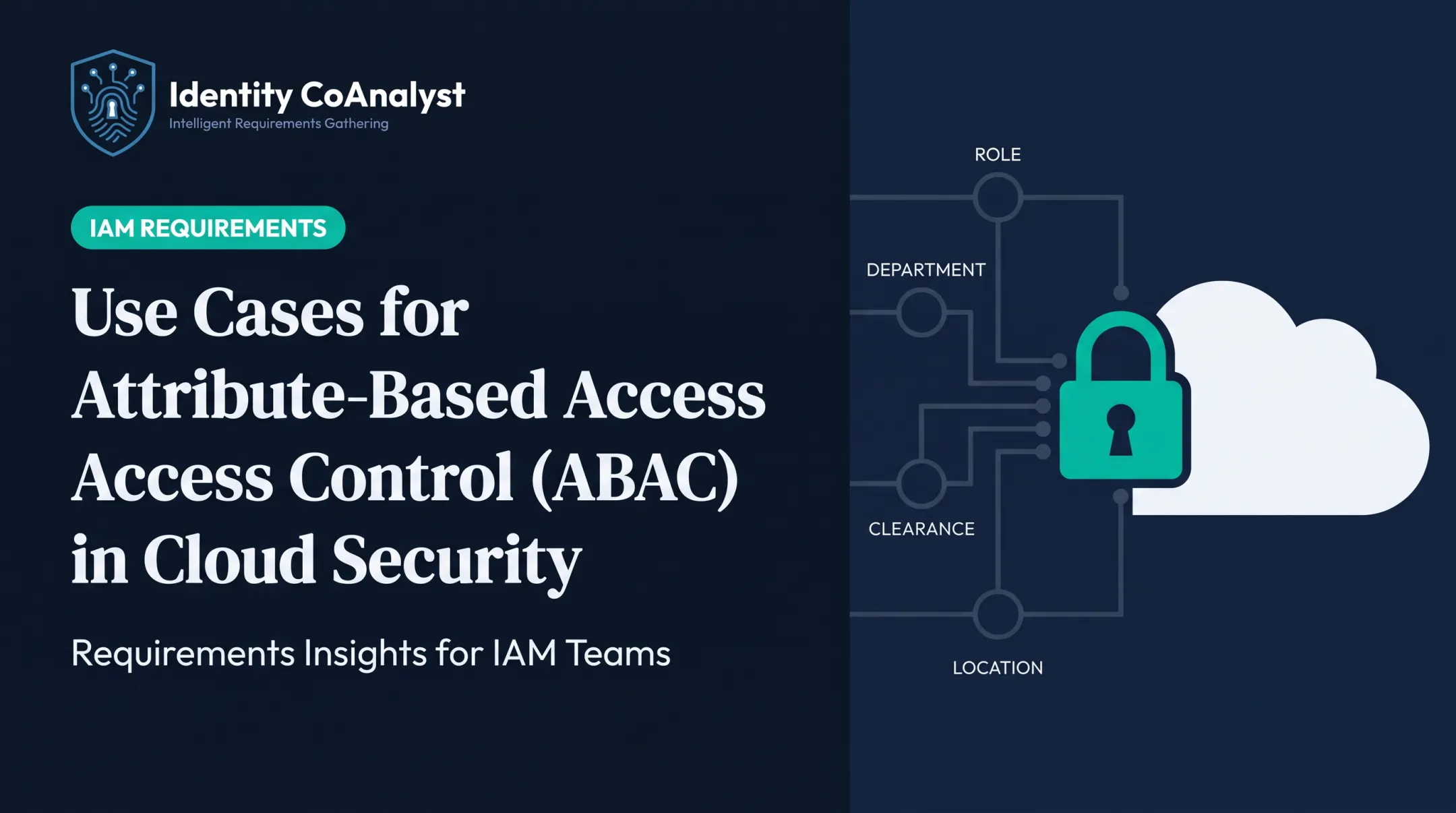
ABAC fits environments where access needs shift constantly:
- Cloud resource access: AWS IAM supports ABAC through tags and condition keys like
aws:PrincipalTagandaws:RequestTag - API-level authorization: Services with many consumers and varying trust levels
- AI agents and non-human identities: Static roles rarely match how machine identities behave
- Regulated data environments: Dynamic, context-sensitive rules for sensitive data
AWS documentation notes that ABAC requires fewer permission sets than role-based structures, which directly reduces permissions-management complexity as environments grow. NIST's NCCoE guidance similarly frames ABAC as a way to enforce least privilege and separation of duties without hand-building a role for every access scenario.

RBAC vs ABAC: Which Should Enterprises Choose?
There's no universal winner. Weigh these factors instead:
- Data sensitivity — Highly sensitive data (PHI, PII, financial records) often needs ABAC's contextual checks
- Number of users and roles — Smaller, stable org charts favor RBAC; sprawling or fast-changing ones favor ABAC
- Regulatory obligations — HIPAA, SOX, and FedRAMP often demand granular, auditable justification for every access grant
- IAM infrastructure maturity — ABAC requires a policy engine and clean attribute data; without that foundation, it's premature
- Pace of organizational change — Frequent reorgs and acquisitions multiply one-off roles and break RBAC role models quickly
A practical rule of thumb: choose RBAC for a straightforward, auditable baseline in a moderately complex organization. Choose ABAC when access must change with context, regulatory scrutiny is high, or org structures shift too often for static roles.
Most mature enterprises don't pick one exclusively. They layer ABAC policies on top of an RBAC foundation — roles handle the 80% of access that's stable and predictable, while attributes handle the exceptions—time, location, risk score, or data classification—that need finer control.

Why Getting Access Requirements Right Matters Before Implementation
Here's the part that gets overlooked: the biggest risk in any access control project isn't RBAC vs. ABAC. It's incomplete requirements gathering. Missed roles. Undocumented attributes. Contradictory answers from stakeholders in different departments who never aligned. These gaps don't show up until mid-implementation, when fixing them costs far more time and money than catching them upfront. Identity CoAnalyst addresses that gap directly. The AI-powered, vendor-agnostic platform helps consulting firms and enterprises capture complete IGA, IAM, and PAM requirements through guided conversational questionnaires. Teams get implementation-ready documentation before anyone configures SailPoint, Saviynt, Okta, or CyberArk. For RBAC specifically, the platform includes a dedicated 28-question RBAC and Role Management domain covering:
- Role definitions, hierarchies, and naming conventions
- Assignment modes and automated assignment rules
- Segregation-of-duties conflicts and compensating controls
- Role ownership, certification cycles, and retirement procedures
- Temporary and emergency access scenarios That depth matters because traditional discovery still runs on meetings, emails, and spreadsheets. The timeline difference is hard to ignore:
- Traditional discovery: typically 12-plus weeks
- Identity CoAnalyst: under 10 days (85% reduction)
- Audit-preparation time: from 4-6 weeks down to as little as 3 days William Leonard built the platform after more than 20 years on the implementation side of enterprise IT at AT&T and IBM. That practitioner background is why the questionnaires focus on the requirements teams usually miss before configuration starts.
Conclusion
There's no universal "winner" between RBAC and ABAC. The right model depends on your organization's complexity, regulatory context, and how dynamic your access needs really are — and plenty of enterprises land on a hybrid of both.
Success depends more on capturing requirements accurately before implementation than on which model you choose. Get that discovery step right—roles, attributes, and policy context included—and you see fewer audit findings, faster onboarding, and far less risk of broken access controls later. Structured requirements platforms such as Identity CoAnalyst help teams document that context up front so RBAC, ABAC, or hybrid designs hold up in production.
Frequently Asked Questions
What are the key steps to implement access control for enterprise applications?
Start with discovery and requirements gathering, then select a model (RBAC, ABAC, or hybrid), define specific policies, and build in ongoing review and auditing. Skipping the discovery phase is the most common cause of downstream rework.
Which is better for enterprise data access control, RBAC or ABAC?
It depends on your organization's complexity and regulatory needs. Most mature enterprises use a hybrid: RBAC as a stable baseline with ABAC layered on for sensitive or dynamic use cases.
What are the main categories of access control for enterprise applications?
The four primary models are Discretionary Access Control (DAC), Mandatory Access Control (MAC), Role-Based Access Control (RBAC), and Attribute-Based Access Control (ABAC). Each varies in how much control resource owners versus administrators have.
What are the "5 D's" of access control?
This is a commonly referenced mnemonic (deter, detect, deny, delay, and defend) for layered physical and digital security measures. It is a practical framework rather than a formal NIST-defined standard.
Can RBAC and ABAC be used together?
Yes, and it's a common enterprise pattern. RBAC provides baseline role assignments for predictable access, while ABAC adds contextual policy layers for sensitive or situational decisions.
How does ABAC support zero trust security models?
ABAC evaluates attributes continuously at each access request rather than granting standing permissions. NIST's zero-trust guidance (SP 800-207) calls for per-request authentication and authorization—the same continuous evaluation model ABAC uses.