
Introduction: What Is a Machine Identity Management Framework?
Access management used to mean managing people: employees logging into email, contractors requesting VPN access, customers resetting passwords. That work still matters—but it is no longer where most authentication happens.
Servers, containers, APIs, service accounts, bots, and CI/CD pipelines now authenticate to each other thousands of times per day, often without a human anywhere in the loop. CyberArk's 2025 Identity Security Landscape underscores the scale (CyberArk, 2025):
- 82 machine identities for every human identity
- 42% of those machine identities carry privileged or sensitive access
A machine identity management framework is the set of governance rules, trusted identity sources, credential controls, lifecycle processes, access policies, and monitoring practices used to secure these non-human identities. This article walks through those components—identity sources, credentials, lifecycle, policy, and monitoring—and how they fit together in practice.
Key Takeaways
- Secure non-human credentials across devices, workloads, services, APIs, and automated infrastructure.
- Every framework must answer two questions: who is this machine, and what should it access?
- Anchor the program on discovery, ownership, lifecycle automation, least privilege, and deprovisioning.
- Complement human IAM, secrets management, PAM, and CIEM—do not treat machine identity as a replacement.
Why Machine Identity Management Needs Its Own Framework
Human identity controls assume a person can respond to a login prompt, verify a device, or approve a push notification. Machines can't do any of that.
How Machine Identities Differ From Human Identities
- No interactive MFA — a script can't tap "approve" on a phone.
- High authentication volume — some workloads authenticate thousands of times per hour.
- Ephemeral lifespans — a container might exist for minutes before it's destroyed.
- Minimal human oversight — many machine-to-machine connections run unattended for months.
Common Machine Identity Types
A single enterprise typically manages a mix of:
- Device and TLS certificates
- SSH keys
- API credentials and OAuth tokens
- Service accounts
- Cloud-native workload identities
- Code-signing credentials
Risks of Treating Machines Like User Accounts
Applying human-centric IAM policies to machine identities creates predictable problems. Service account sprawl is a good example — organizations frequently accumulate thousands of service accounts with unknown owners that are never decommissioned. Left unmanaged, this pattern leads to:
- Unknown or "shadow" identities with no documented owner
- Excessive standing permissions
- Exposed secrets hardcoded in source or config files
- Orphaned credentials that outlive the systems they served
- Lateral movement paths for attackers
- Certificate-related outages when expiration dates go unnoticed
These aren't edge cases you can fix with tighter user-IAM policies. Non-interactive, high-volume, short-lived identities need discovery, lifecycle controls, and secret handling built for machines—which is why machine identity management requires its own framework.

Key Components of a Machine Identity Management Framework
A mature framework rests on five layers. Skip one, and the others weaken.
Identity and Credential Inventory
You can't govern what you can't see. This layer discovers machine identities across:
- On-premises infrastructure and Kubernetes clusters
- Cloud platforms and CI/CD pipelines
- IoT and operational technology environments
- Certificate stores, repositories, and configuration files
Trust and Identity Issuance
This is where a machine identity gets its credibility. Core pieces include:
- Public key infrastructure and certificate authorities
- Registration and approval workflows
- Cloud workload identity providers (such as Google's Workload Identity Federation or Microsoft Entra Workload ID)
- Attestation mechanisms that confirm an identity's attributes before trust is granted
Credential Protection
Certificates, private keys, SSH keys, API tokens, and encryption keys need dedicated protection, distinct from the identity itself. NIST SP 800-57 recommends restricting plaintext private keys to physically protected environments (NIST, 2020). Hardware security modules make sense for high-value keys; software vaults work for most everyday secrets.
Access Policy and Authorization
Identity alone doesn't answer the access question. This layer maps identities to resources using:
- Role-based policies for standard access patterns
- Attribute-based policies for dynamic, context-driven access
- Just-in-time or short-lived credentials instead of standing privileges
Visibility, Monitoring, and Audit
Every credential needs a documented owner, purpose, and history. This layer tracks:
- Issuance events and rotation activity
- Anomalies, revocations, and policy exceptions
That record helps teams investigate incidents and prove control effectiveness during audits.
The Machine Identity Lifecycle and Control Flow
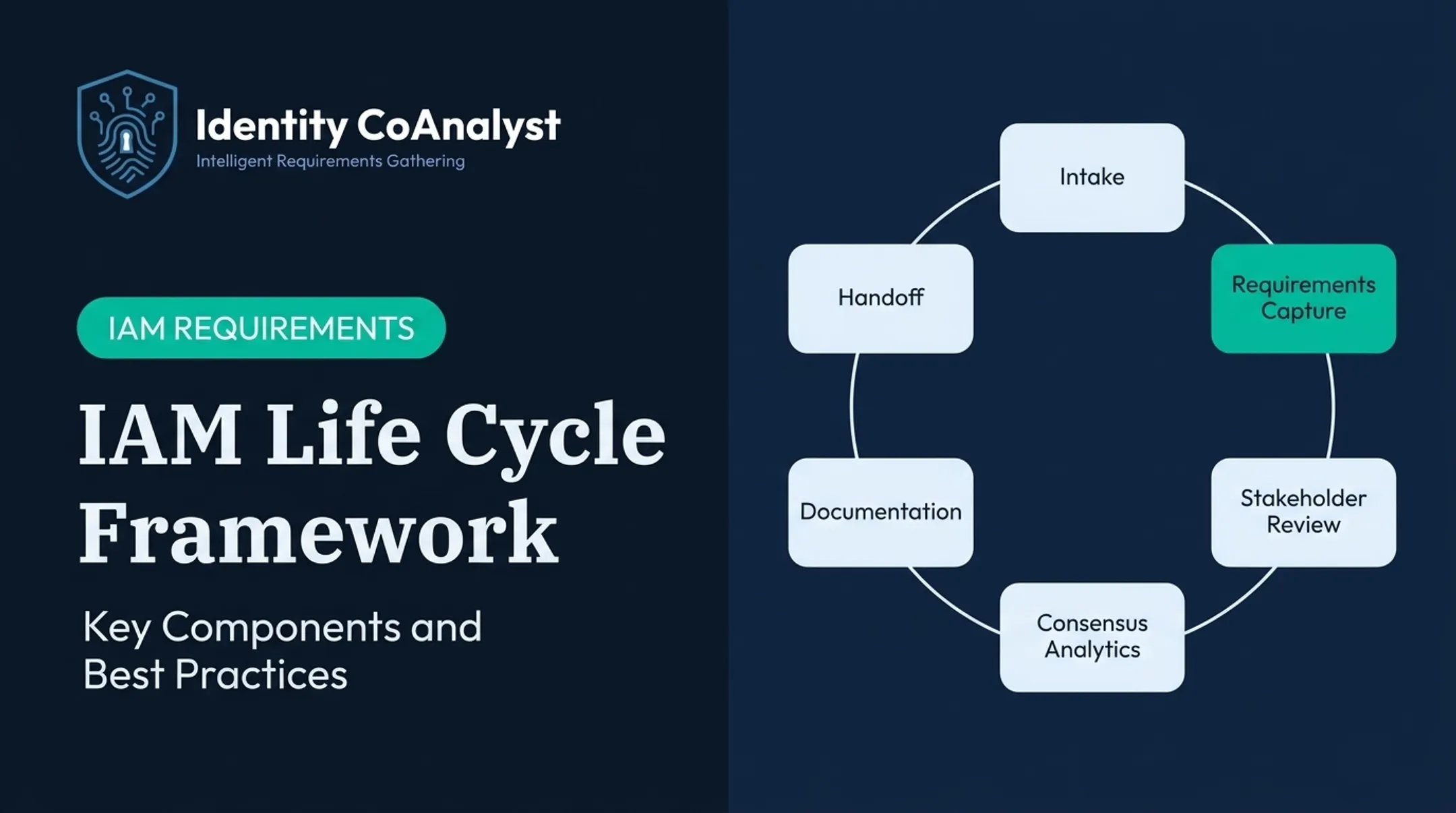
Components only work when they're connected through a lifecycle that drives control flow. Five stages matter most:
- Discovery and classification: Identify what exists, classify identity type and business function, record the owner and environment, and flag unknown, duplicate, or expired credentials.
- Issuance and provisioning: Validate the requesting workload, issue credentials through an approved authority, bind access to a defined purpose, and log the decision.
- Deployment and use: Deliver credentials securely at runtime. Never hardcode secrets in source code or container images. Authenticate every machine-to-machine connection and enforce authorization at the resource layer.
- Rotation, renewal, and recovery: Automate renewal before expiration and rotate credentials after a set interval or suspected exposure. Test dependencies first, since a botched rotation can break production.
- Revocation and deprovisioning: Revoke compromised credentials immediately, remove access when a device or workload retires, and verify that destroyed resources don't retain usable credentials.
Rotation cadence is tightening industry-wide. The CA/Browser Forum's Ballot SC081v3 reduces maximum public TLS certificate validity from 398 days down to 47 days by March 2029 (CA/Browser Forum, 2025). Manual certificate tracking can't keep pace with that schedule, so automated renewal and inventory have to carry the load.

Common Challenges and Framework Gaps
Even well-designed frameworks stall out in practice. Three gaps show up repeatedly.
Fragmented ownership. Security, IAM, infrastructure, DevOps, networking, and compliance teams each touch machine identities, but rarely agree on who owns what. Fix this by assigning clear accountability for each identity class and lifecycle decision, not just a general policy statement.
Tooling fragmentation. PKI, certificate lifecycle management, secrets managers, PAM, cloud IAM, and CIEM tools often operate as isolated silos.
Keyfactor's 2024 PKI & Digital Trust Report found organizations experienced an average of nine certificate-related incidents in twelve months. Yet only 32% used a dedicated certificate lifecycle management tool (Keyfactor, 2024). More than 70% said they needed more staff and resources for PKI alone.
Automation versus operational safety. Aggressive automated rotation improves security but can break legacy applications with embedded credentials or systems that predate modern identity standards. The safest rollouts phase automation in, starting with low-risk, well-documented systems before touching anything business-critical.
How to Implement the Framework in an Enterprise
Rolling out machine identity management works best as a phased program, not a single tool purchase.
- Scope and discover requirements. Identify business-critical systems, machine identity categories, regulatory obligations, trust boundaries, and required integrations before evaluating any technology.
- Build a prioritized roadmap. Start with inventory and ownership, then tackle high-risk credentials, exposed secrets, excessive permissions, and certificate expiration on production systems.
- Define operating policies. Set issuance standards, validity periods, rotation requirements, emergency revocation procedures, and clear responsibility across security and platform teams.
- Integrate into engineering workflows. Connect issuance and rotation to CI/CD, infrastructure-as-code, Kubernetes, service meshes, and API gateways so security keeps pace with deployment speed.
The hardest part is usually requirements accuracy. Each stakeholder sees a different slice of the environment, so gaps and contradictions often surface late without structured discovery.
Identity CoAnalyst supports that planning phase with AI-guided, vendor-agnostic questionnaires. Teams use it before anyone configures a machine identity, IAM, PAM, or IGA platform to:
- Collect stakeholder input asynchronously across security, platform, and engineering groups
- Surface contradictions and document governance and access needs
- Produce an implementation-ready requirements baseline upstream of tooling choices
That baseline holds whether you later deploy SailPoint, Saviynt, Okta, CyberArk, or another platform.

Frequently Asked Questions
What is IAM and how does it relate to machine identity management?
IAM is the broader discipline for managing identities and access across an organization. Machine identity management is a focused subset that handles non-human identities and their automated credentials. Effective programs treat machine identity controls as part of the overall IAM strategy.
What are common IAM tools and examples?
Categories include identity providers, IGA platforms, PAM tools, secrets managers, cloud-native IAM, certificate lifecycle management systems, and workload identity solutions like SPIFFE. Each category covers a different control plane in the identity stack.
What are examples of machine identities?
Servers, containers, APIs, service accounts, cloud workloads, IoT devices, CI/CD runners, bots, and code-signing processes all qualify. Any non-human entity that authenticates to access a resource counts as a machine identity.
What is the difference between machine identity management and secrets management?
Machine identity management governs the identity, trust, access, and lifecycle of a machine or workload. Secrets management protects the credentials themselves, such as keys, tokens, and passwords. Most mature setups connect both so credentials stay bound to identity lifecycle events.
Why is certificate lifecycle management important for machine identities?
It covers discovery, issuance, renewal, rotation, and revocation, preventing the outages that come from expired certificates. Manual tracking becomes unreliable once validity periods shrink and certificate volume grows.
How should an organization start a machine identity management program?
Begin with an inventory, assign clear ownership, and run a risk assessment on existing credentials. From there, build a prioritized roadmap covering lifecycle automation, least-privilege policies, and measurable monitoring controls.