
These aren't edge cases. US data breach costs hit a record $10.22 million on average in 2025, up 9% year-over-year, according to IBM's Cost of a Data Breach Report. Identity-related incidents are a major driver of that number.
Automated user provisioning can fix a lot of this, but only if it's built correctly. Speed without governance just means bad access decisions happen faster. This article covers how secure provisioning actually works, the lifecycle stages that matter most, and how to implement automation without creating new blind spots.
Key Takeaways
- Treat automated provisioning as policy-driven account creation, modification, and removal across every connected system
- Secure automation covers the entire joiner-mover-leaver lifecycle, not just onboarding
- Accurate identity data, role design, and approval controls matter more than the automation tool itself
- Post-launch monitoring, reconciliation, and periodic access reviews are non-negotiable
- Automation without governance grants excessive access faster and at greater scale
What Is Automated User Provisioning?
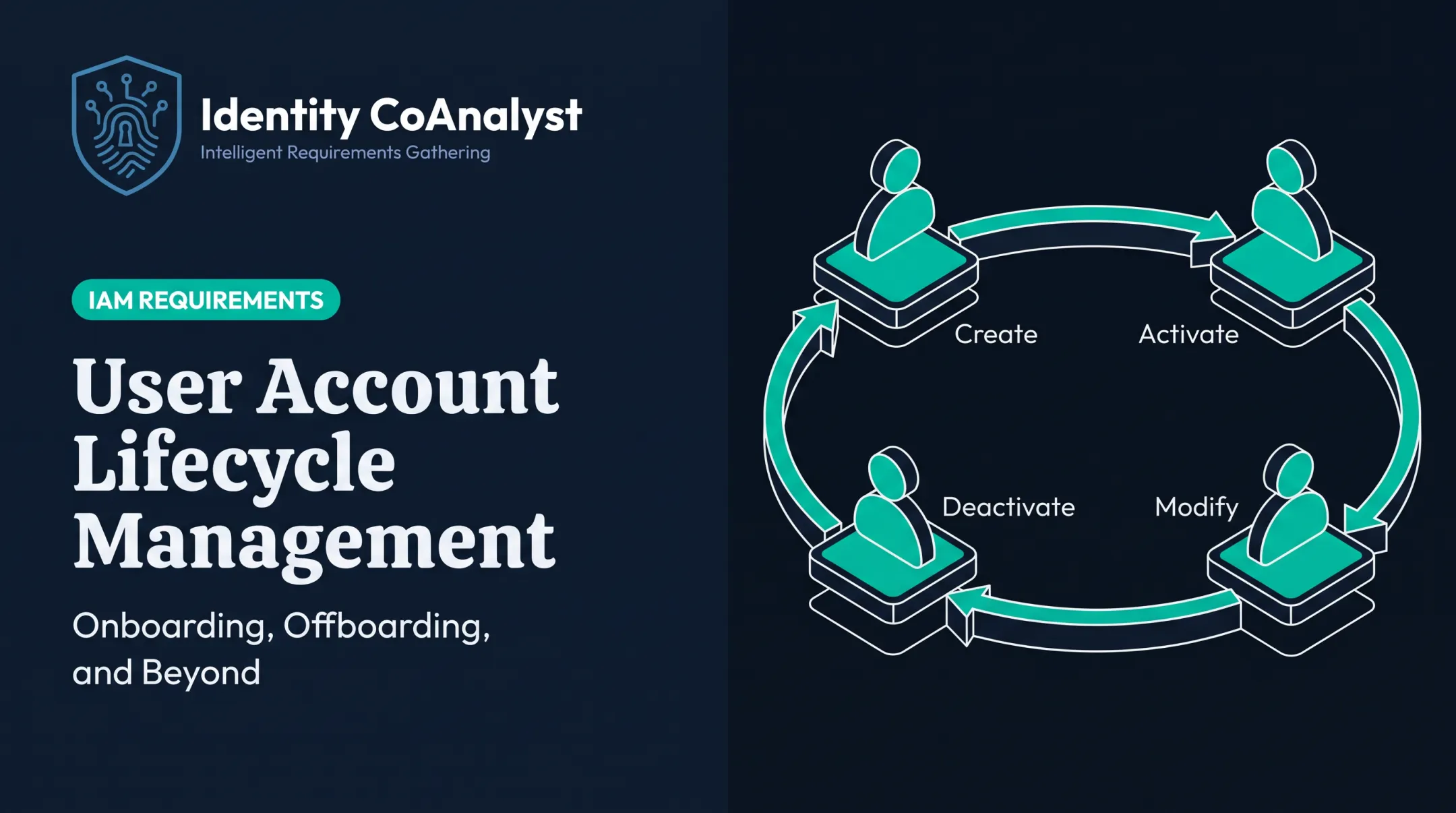
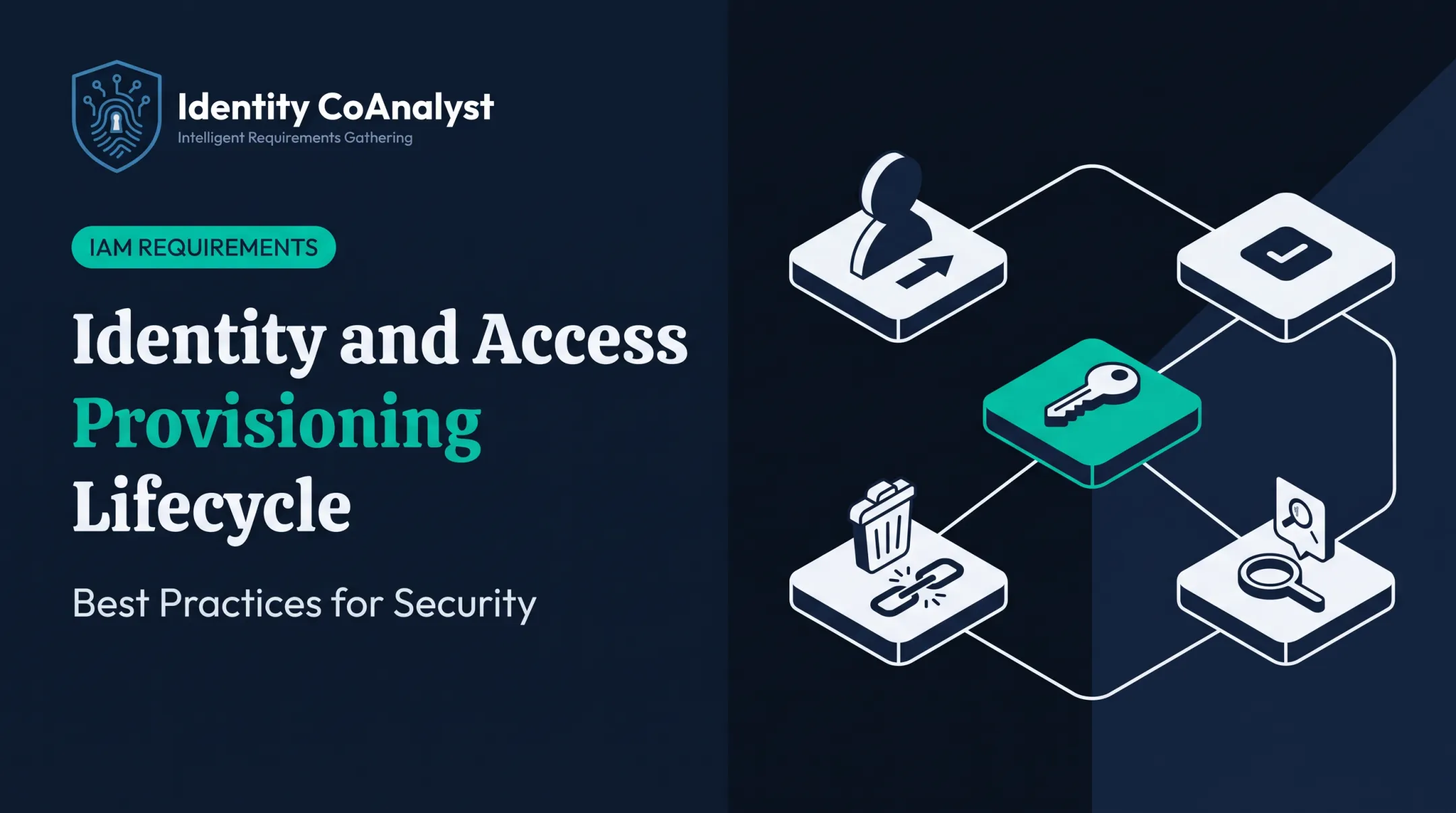
Automated user provisioning is the policy-driven creation, modification, and removal of user accounts and access rights across connected systems, without manually configuring each application. It sits inside the broader discipline of Identity Governance and Administration (IGA), which manages the identity lifecycle from creation through termination.
Account creation is only part of the story. Real provisioning also assigns:
- Group memberships and role-based permissions
- Application licenses
- Birthright access (email, intranet, collaboration tools)
- Department- or location-specific entitlements
Provisioning, Deprovisioning, Access Requests, and Access Reviews Aren't the Same Thing
These terms get used interchangeably, but they describe distinct processes:
- Provisioning grants or updates access when someone joins or changes roles
- Deprovisioning suspends, disables, or removes access when it's no longer needed
- Access requests handle on-demand needs outside the automated lifecycle, such as a temporary project permission
- Access reviews (certifications) are periodic checks confirming that existing access is still appropriate
Treating these as one process is a common mistake. An organization might automate provisioning beautifully and still fail security audits because nobody reviews standing access afterward.
Who's Involved in a Provisioning Architecture
Three layers typically make up a provisioning setup:
- Authoritative sources — HRIS platforms like Workday, or contractor management systems that hold the "truth" about who someone is
- Identity providers and IGA platforms — the layer that evaluates policy and decides what access to grant
- Downstream targets — Active Directory, SaaS apps, infrastructure, and data resources that actually receive the changes

For example, when Workday marks an employee's status as "Active," a joiner workflow can automatically create an Active Directory account, provision email, and assign a base role plus a department-specific role.
If that employee later transfers departments, the old department role should be revoked immediately while the new one is assigned. Termination should trigger revocation across every connected system, not just the primary directory.
Automation on its own isn't a security control. It's a mechanism. Without validated identity attributes, well-defined access policies, and restrictions on who can alter the provisioning workflows, automation just executes bad decisions faster than a human ever could.
How Automated User Provisioning Works
Provisioning follows a repeatable event flow every time an identity changes:
- Detect a verified HR or identity event (new hire, transfer, termination)
- Validate the required attributes and confirm identity matching
- Evaluate role, group, policy, approval, and risk conditions
- Act: create, modify, suspend, or revoke access in target systems
- Record and notify: log the outcome and alert the appropriate owner, especially on failure
RBAC, ABAC, and Hybrid Models
Most organizations use a mix of two access models:
| Model | How it decides access | Best suited for |
|---|---|---|
| RBAC (role-based) | Predefined roles carry fixed privileges | Standard, predictable access patterns |
| ABAC (attribute-based) | Evaluates job role, department, location, project, risk context in real time | Dynamic or conditional access needs |
A common hybrid rule uses ABAC-style conditions to drive an RBAC outcome. When EmployeeType = "Full-Time", Department = "Sales", Location = "United States", and Status = "Active", the system assigns the "Sales Representative - US" role and provisions Salesforce, CPQ, and the Sales Portal automatically.
Those decisions only matter if the IGA layer can reach the apps. Integration usually runs through SCIM, REST APIs, LDAP, directory groups, or vendor-specific connectors. Capabilities vary widely by application: some support real-time provisioning with rollback; others need manual fulfillment because they lack an API.
Lifecycle Scenarios That Matter Most
- Joiners get birthright access first (email, intranet, base role), with anything beyond that routed for separate approval
- Movers should lose old-role access before gaining new-role access, with conflicts routed for review rather than granted by default
- Leavers need immediate revocation across AD, VPN, email, badges, and MFA tokens, plus privileged-account cleanup and scheduled account deletion
- Contractors get access tied to a defined end date and an accountable owner, not an open-ended assignment

A realistic mover example: a Marketing Manager transfers into Sales at month three. IGA should revoke the Marketing Team role, kick off recertification, and only then assign Sales-specific access.
Reconciliation Catches What Automation Misses
Even well-built provisioning breaks. Connectors fail. Someone makes a manual change outside the workflow. Duplicate identities slip through. Reconciliation compares intended access against actual access in target systems, flagging orphaned accounts and mismatched attributes before they become audit findings.
Best Practices for Secure Automated Provisioning
Start With Trustworthy Identity Data
Provisioning decisions are only as good as the data feeding them. Designate one authoritative source, usually the HRIS, and assign clear ownership for:
- Status, role, and department
- Manager and worker type
- Start date and end date
Employee IDs should be unique and never reused.
Design Least-Privilege Access Policies
- Separate birthright access from elevated, sensitive, or privileged access
- Base role and attribute rules on business need, not convenience
- Watch for broad group inheritance that quietly grants excessive permissions
- Document every exception with an accountable owner and a review date
Treat Movers and Leavers as First-Class Workflows
Onboarding gets most of the attention, but transfers and terminations carry more risk.
- Remove obsolete access during a transfer before granting anything new
- Trigger termination actions immediately, revoking sessions, credentials, group membership, and privileged access wherever the target system supports it
- Build an escalation path for any application that can't complete the change automatically
Build Approval and Segregation-of-Duties Controls
Sensitive access needs stronger review than standard requests:
- Route requests to the correct manager, application owner, or security approver, never the requester
- Enforce hard blocks on incompatible role pairs (a Purchase Requestor should never also hold Purchase Approver rights)
- Allow soft-block exceptions, such as Application Developer plus Production Admin, only with executive sign-off, a documented reason, and a hard expiration of 90 days or less
- Make temporary access expire automatically instead of relying on someone to remember it

Protect the Provisioning System Itself
- Use narrowly scoped service accounts and secrets management for API authentication
- Restrict who can modify connector settings, role mappings, and workflow logic
- Keep development, test, and production environments separate
- Log administrative changes to the provisioning system, not just user access changes
Monitor, Reconcile, and Review Continuously
Alert on failed provisioning, unusual bulk changes, and unexpected attribute edits. Retain audit records showing the trigger, decision, approver, and outcome for every change.
Review cadence should scale with risk:
- Privileged and financial access: quarterly
- Standard access: annually
How to Implement Automated Provisioning Securely
Assess Before You Automate
Map your current state first: users, applications, directories, privileged accounts, manual workflows, and existing authoritative sources. This step surfaces the access risks you'll need to address before turning on automation, not after.
Prioritize High-Value Use Cases
Don't automate everything at once. Start with:
- New-hire access
- Employee transfers
- Termination
- Contractor expiration
- Access to sensitive applications
Define Requirements Before Touching Configuration
This is where most projects go sideways. Teams jump into IGA platform configuration before agreeing on birthright roles, approval paths, SoD constraints, and expiration rules. The result is rework, missed requirements, and audit gaps discovered months later.
A single contractor-access requirement can touch the HR system, three applications, an approval chain, a certification cadence, and a regulatory control simultaneously. Capturing that context accurately, across every stakeholder, is genuinely difficult with interviews and spreadsheets.
This is the gap Identity CoAnalyst was built to close. It's a discovery and requirements-gathering platform, not a provisioning engine. It doesn't create accounts or enforce policy.
Instead, it runs structured, conversational stakeholder discovery across IGA, IAM, and PAM domains, then generates implementation-ready requirements documentation before SailPoint, Saviynt, or Okta configuration begins. Firms using it have compressed a 12-week requirements phase into under 10 days, with fewer gaps surfacing during testing.
Test With Real Scenarios, Including the Ugly Ones
Validate these edge cases in a non-production environment before go-live:
- A new hire with incomplete HR data
- An employee moving between conflicting roles
- An immediate termination
- A contractor whose end date changes mid-contract
- A duplicate identity or failed connector
- A privileged access request needing multiple approvals
Launch With Monitoring, Not a Light Switch
Track provisioning failures, exceptions, stale accounts, and time-to-revoke from day one. Build a human override process for emergencies, but never let manual workarounds skip logging or approval requirements. Revisit role definitions and connector behavior as the organization changes, because it will.
Common Risks and Failure Points to Avoid
Bad data breaks everything downstream. Incorrect HR records, ambiguous job titles, duplicate identities, and stale group membership cause automation to grant or retain access that nobody actually approved, at scale.
Automating creation without automating cleanup. A provisioning system with no deprovisioning, reconciliation, or exception handling produces orphaned accounts, permissions that outlive their purpose, and terminated workflows that quietly fail.
This risk isn't theoretical. IDSA's 2022 survey found that only 51% of organizations removed access on an employee's departure day or the day after, split between 35% same-day and 16% next-day.
The rest left access active longer. A well-documented gasoline-shortage incident traced back to credentials never suspended after departure, according to IDSA's report on identity security trends. The CISA and NSA identity management guidance flags former employees' unsuspended accounts as an active threat vector.
Governance weaknesses hiding behind automation:
- Excessive birthright access granted for convenience
- Requesters approving their own access
- Applications with no assigned owner
- Contractor access that never expires
- Undocumented exceptions with no review date
- Integration service accounts holding far more privilege than the task requires

Skip the big-bang rollout. Turning on every application and rule simultaneously removes your ability to catch mistakes before they scale. A staged rollout with rollback plans, alerting, and defined ownership catches problems while they're still small.
Frequently Asked Questions
What is automated user provisioning?
Automated user provisioning is the policy-driven creation, update, and removal of user accounts and access across connected systems throughout the identity lifecycle. It replaces manual, application-by-application account setup with rule-based automation.
What is the purpose of provisioning?
Provisioning gives users the access their role requires, no more and no less, while supporting consistency, least privilege, and auditability. Done well, it also reduces the operational burden on IT teams.
How does automated provisioning improve IT security?
It speeds up access changes, reduces manual errors, enforces policy consistently, and produces audit trails automatically. Automation only works as well as the policies and identity data behind it.
What is the difference between provisioning and deprovisioning?
Provisioning grants or changes access when someone joins, moves, or needs something new. Deprovisioning suspends, removes, or cleans up access once it's no longer required, such as after a termination.
What systems are commonly used for automated user provisioning?
Authoritative HR systems, identity providers, IGA platforms, and directories typically drive provisioning into SaaS applications and infrastructure. Integration usually happens through SCIM, REST APIs, or LDAP.
How can organizations prevent automated provisioning from granting too much access?
Enforce least privilege, keep identity attributes accurate, and require approval plus segregation-of-duties checks for sensitive access. Add time-bound expiration and periodic reconciliation to catch anything that slips through.